
Twenty-one days left… only fifteen more days… eight days to go… In every school across the country, there are students and staff who are counting down the days, or perhaps even the hours, until the last day of school. With end-of-the-year field trips, portfolio presentations, moving up ceremonies, and the like, school might even feel like it’s basically over. Many administrators and teachers may have already begun the process of planning for next school year, from conducting systems scans and completing school improvement plans to creating class lists and tweaking professional goals.
In the midst of the hustle and bustle of the end of the year, a crucial process that cannot go overlooked is reflection. This type of reflection is often built in to various structures for the adults in the building–surely many of us have participated in an end-of-the-year staff meeting to reflect on some variation of the questions, “What worked well this year? What could be improved on?” However, what structures do we put in place for our young people so that they too can engage in this most important process?
Why Reflection Is Important
Before we discuss structures and classroom application, let’s first discuss, why reflection? When I was a teacher, if I was running short on time and the class period was about to end, reflective exit tickets or group closing activities were often the first things to go. Why bother pausing to reflect, we might think to ourselves, when kids need help getting their jackets on for recess or when students are itching to be dismissed?
Sometimes we tend to think of reflection as a touchy-feely nice-to-have, not a must-have. However, as the Universal Design for Learning (UDL) Guidelines remind us, the goal of UDL is “learner agency that is purposeful & reflective, resourceful & authentic, strategic & action-oriented” (CAST, 2024). Moving our students from being dependent learners to independent learners involves teaching them to regularly engage in reflection.
What’s more, the UDL principle of engagement specifically names “promote individual and collective reflection” as one of its considerations. Not only does reflection promote developing emotional capacity, but metacognition skills can help students develop motivation, which is a key factor in student learning and achievement.
Reflection & Circle Practice
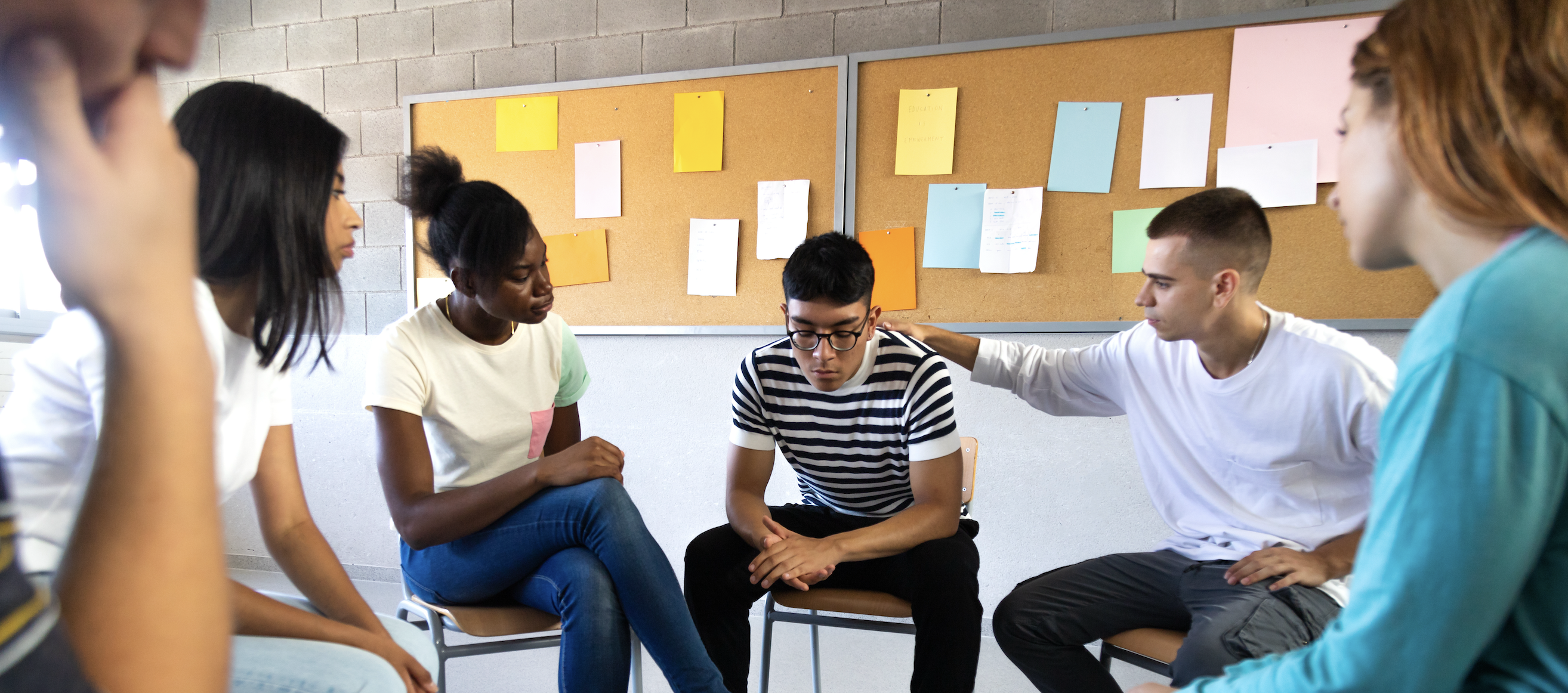
While many of us might feel spent at this time of year, using circle practice, one of the bedrocks of restorative practices, is a relatively simple yet powerful way to build in a structure that incorporates reflection, not to mention one that also builds community, a significant goal in itself.
For those who might be new to some of this language, in our book, Restorative Practices That Heal School Communities, Mirko Chardin, Edgar Vasquez, and I define restorative practices as a framework and range of approaches that aim to develop community and to manage conflict and tensions by repairing harm and restoring relationships. Circles involve a whole-group, inclusive approach in which everyone participates in discussions that foster a sense of community and address general topics or issues or in which there are targeted discussions that focus on specific issues or concerns (Chardin et al., 2025).
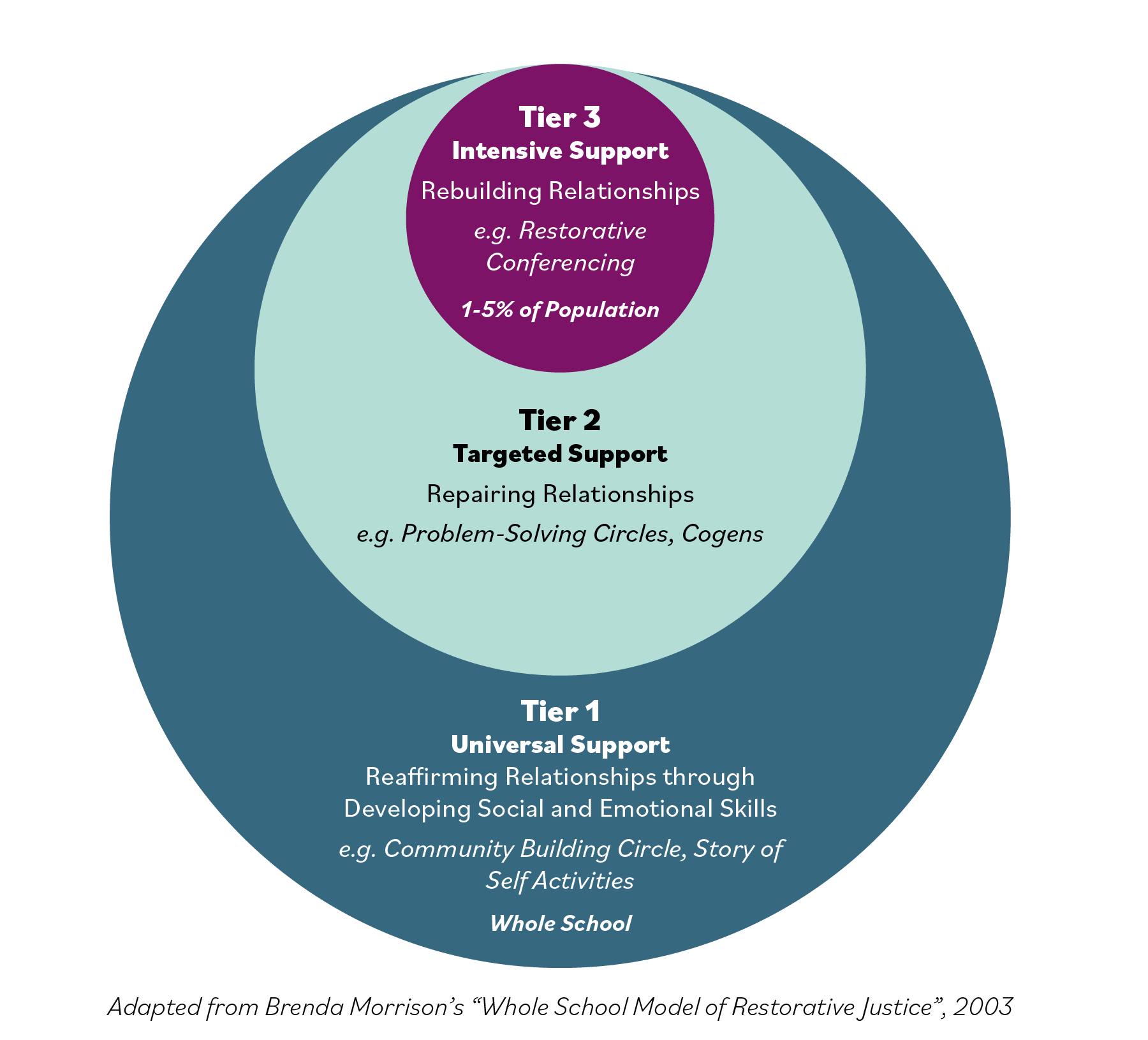
It’s worth noting that an end-of-the-year circle would be categorized as a Tier 1 circle. Tier 1 approaches are universal in that they are proactive and center on re-affirming relationships through building social and emotional skills. In schools, this might look like daily, weekly, or monthly tier 1 circles focused on community building. On the other hand, Tier 2 practices are targeted and focus on repairing relationships in classrooms or groups, and Tier 3 approaches are intensive and center on rebuilding relationships via conferencing and mediation.
Figure 1: Whole-School Model of Restorative Practices
For those of you who may have struggled with building a positive classroom climate this year, you may be thinking, why bother trying now? I’ll just do something different with my new batch of students next year. However, those same students you have for the remainder of this year are only going to become even further disengaged and perhaps even more unruly as all of you wait for this year to just be over. A tier 1 circle might actually serve as a lifeline, one that can help to increase student engagement at a time of year when it is most needed and one that will help to end the year on a more positive note.
For those of you who have already managed to build a solid classroom culture, first, congratulations! And second, just know that utilizing tier 1 circles versus, say, a simple group discussion or written reflection, tends to bring out more engagement and connectedness. By design, circle practice via its very shape encourages unity and connectedness. In addition, circles involve designating a talking piece that is passed around during each discussion round; this manipulative and the process of using it encourages equity of voice as well as student empowerment. What’s more, incorporating discussion prompts and various movement activities or games during the circle build buy-in, not to mention that all important joy factor.
How to Design a Tier 1 Circle for End-of-the-Year Reflection
Nevertheless, if you find yourself counting down the days or hours left in the school year–don’t worry, this is a judgment-free zone!–trying something new or something that seems like a heavy lift might be the last thing you want to do. Instead, you might be looking for something a bit pre-packaged, something that is almost sure to increase student engagement at a time when more and more students are ready to check-out. Enter the handy, tier 1 circle planning template below.
When designing a circle in your classroom, follow these steps:
- Goal - What is my purpose in running this circle?
- Opening - How will you open the circle? A poem, quote, song, breathing, story…?
- Talking Piece - What object am I using and why?
- Guidelines/Values - What questions will I ask to create shared guidelines and values?
- Check-In - What question will I ask?
- Discussion Rounds - What needs to be addressed in the circle? What questions will I ask? How many rounds?
- Check Out - How are people feeling right now?
- Closing - How will I close this circle? A poem, quote, song, breathing, story…?
As you consider the remaining days of school, here’s a template you can use for planning your end-of-the-year circle (feel free to modify as necessary depending on students’ grade level and the amount of time you allot for this activity).
Circle Planning Template
| 1. Goal |
Reflect on the end of the school year |
| 2. Opening |
Share a quote, such as: “The greatest glory in living lies not in never falling, but in rising every time we fall.” – Nelson Mandela |
|
3. Talking Piece |
Facilitator’s and/or students’ choice - select an object that holds some type of meaning or sentimental value, and discuss that meaning with the group |
|
4. Check-In |
Share one word/phrase that comes to mind when you think of this past school year |
|
5. Guidelines/Values |
* Feel free to co-create guidelines with the group or add to this list! |
|
6. Discussion Rounds |
|
|
7. Check Out |
Fill in the blank: “I’m feeling ________ right now.” |
|
8. Closing |
Mindful Breathing: End with 1-2 minutes of silent, deep breathing to ground the group before they transition into their next environment. Model as necessary. OR Reflection Ball Toss: Toss a soft ball around the circle. When students catch it, they share something about the group or anyone in the group that they’re grateful for. |
Whether you have a month or week left of school, it’s never too late to take a moment to pause, plan, and reflect. In fact, when things feel the most hectic, it might be just the right time to take a moment to slow down and have everyone engage in some reflective practice.
References:
CAST (2024). CAST Universal Design for Learning Guidelines version 3.0. Retrieved from https://udlguidelines.cast.org
Chardin, M., Chu-Sheriff, P., & Vasquez, E. (2025). Restorative Practices That Heal School Communities. CAST Publishing.